
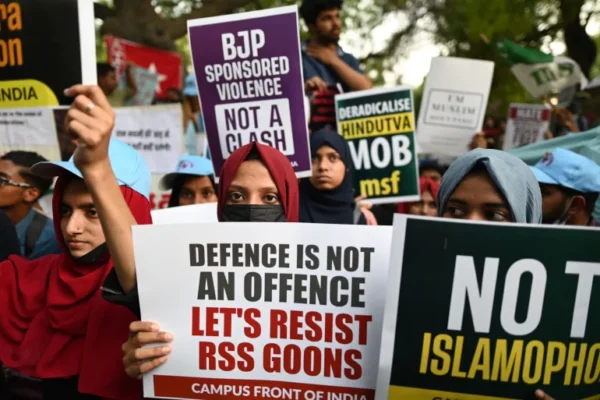
Hindutva and Anti-Muslim Violence: Understanding the Ideology and Its Impact
A new research paper by Safa Ahmed, published by the Yaqeen Institute for Islamic Research, examines the ideology of Hindutva and its relationship to rising anti-Muslim discrimination and violence in India. The paper provides historical context and analysis to help readers better understand how Hindu nationalist movements have shaped political discourse and social tensions in recent years.
The research traces the ideological roots of Hindutva, a political framework associated with Hindu nationalism that seeks to define Indian identity primarily through Hindu cultural and religious heritage. According to the paper, critics argue that this ideological vision has contributed to the marginalization of minority communities, particularly Muslims and Christians.
Historical Context
The study situates current developments within the broader history of South Asia, including the long-term consequences of the 1947 Partition of India and Pakistan. The partition, which divided millions of people along religious lines, continues to influence political narratives and communal relations across the region.
By examining the evolution of nationalist movements and their political strategies, the paper seeks to explain how certain narratives about identity and belonging have shaped contemporary debates about citizenship, national identity, and minority rights.
Narratives and Social Polarization
The research also explores how conspiracy narratives and misinformation have contributed to social polarization. For example, claims such as “love jihad”—which allege that Muslim men seek to convert Hindu women through marriage—have been widely criticized by scholars and human rights advocates as conspiracy theories used to stigmatize Muslim communities.
According to the paper, the spread of such narratives through political rhetoric, media discourse, and social media can intensify mistrust between communities and normalize hostility toward religious minorities.
Implications for Religious Freedom
For policymakers, researchers, and civil society organizations concerned with religious freedom and democratic values, the paper highlights the importance of understanding the ideological and political drivers behind communal tensions.
Monitoring hate speech, documenting incidents of violence, and promoting evidence-based discussion are essential steps toward protecting minority rights and strengthening pluralistic democratic institutions.
Read the Full Paper
🔗 Hindutva and Anti-Muslim Violence: How to Navigate Hindu Supremacy