
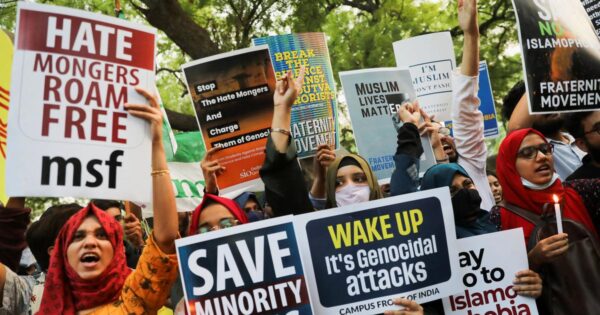
Religious freedom in India is a complex and evolving issue, fundamentally grounded in its Constitution, which explicitly defines India as a secular state. While the legal framework provides robust protections for all faiths, international human rights organizations and government reports have highlighted a significant decline in freedoms over the last decade, including increasing reports of communal violence and restrictive state laws. Congress.gov
Constitutional and Legal Framework
The Indian Constitution guarantees the right to freedom of religion as a fundamental right:
- Fundamental Right: Articles 25–28 of the Constitution of India guarantee all persons the right to freely profess, practice, and propagate their religion, subject to public order, morality, and health.
- Article 25: Grants all individuals the freedom of conscience and the right to freely profess, practice, and propagate their religion.
- Article 26: Allows religious denominations to manage their own affairs in matters of religion.
- Article 27-28: Prohibits the state from taxing for the promotion of any particular religion and restricts religious instruction in wholly state-funded educational institutions.
- Personal Laws: The legal system accommodates different personal status laws for different religious communities regarding marriage, divorce, and inheritance.
- Secularism: The preamble explicitly declares India a secular state, meaning the government should not discriminate based on faith.
Key Concerns and Recent Developments (2024–2026)
Recent reports from the U.S. Commission on International Religious Freedom (USCIRF) and the U.S. State Department indicate growing challenges for religious minorities, particularly Muslims and Christians: U.S. Department of State (.gov)
- Anti-Conversion Laws: As of early 2026, roughly 13 of India’s 28 states have passed “Freedom of Religion” acts that restrict religious conversion through “force, fraud, or allurement”. Critics argue these are often used to target minority groups, particularly Christians and Muslims.
- “Country of Particular Concern” (CPC): For several consecutive years, including in its 2025 and 2026 annual reports, The U.S. Commission on International Religious Freedom (USCIRF) has repeatedly recommended that India be designated a “Country of Particular Concern” (CPC) due to “systematic, ongoing, and egregious” violations, including mob violence and discriminatory legislation.
- Communal Violence and Vigilantism: Reports from 2024 and 2026 highlight escalating attacks by vigilante groups against minorities, often involving “cow protection” or allegations of forced conversion.
- Citizenship Amendment Act (CAA): Critics argue this 2019 law, which provides a path to citizenship for non-Muslim refugees from neighboring countries, is discriminatory as it excludes Muslims.
- FCRA Restrictions: India’s Foreign Contribution (Regulation) Act (FCRA), 2010, is widely criticized by human rights organizations as a repressive tool used to silence NGOs, critical voices, and civil society. By restricting foreign funding, suspending licenses of prominent organizations (e.g., Greenpeace, Amnesty International), and imposing strict bureaucratic hurdles, the government has been accused of violating freedoms of association and expression..
Societal Perspective
Despite these challenges, a 2021 Pew Research Center report found that 84% of Indians believe that to be “truly Indian,” it is very important to respect all religions. However, the same report noted that a majority of Hindus (64%) link their religious identity to their national identity.