
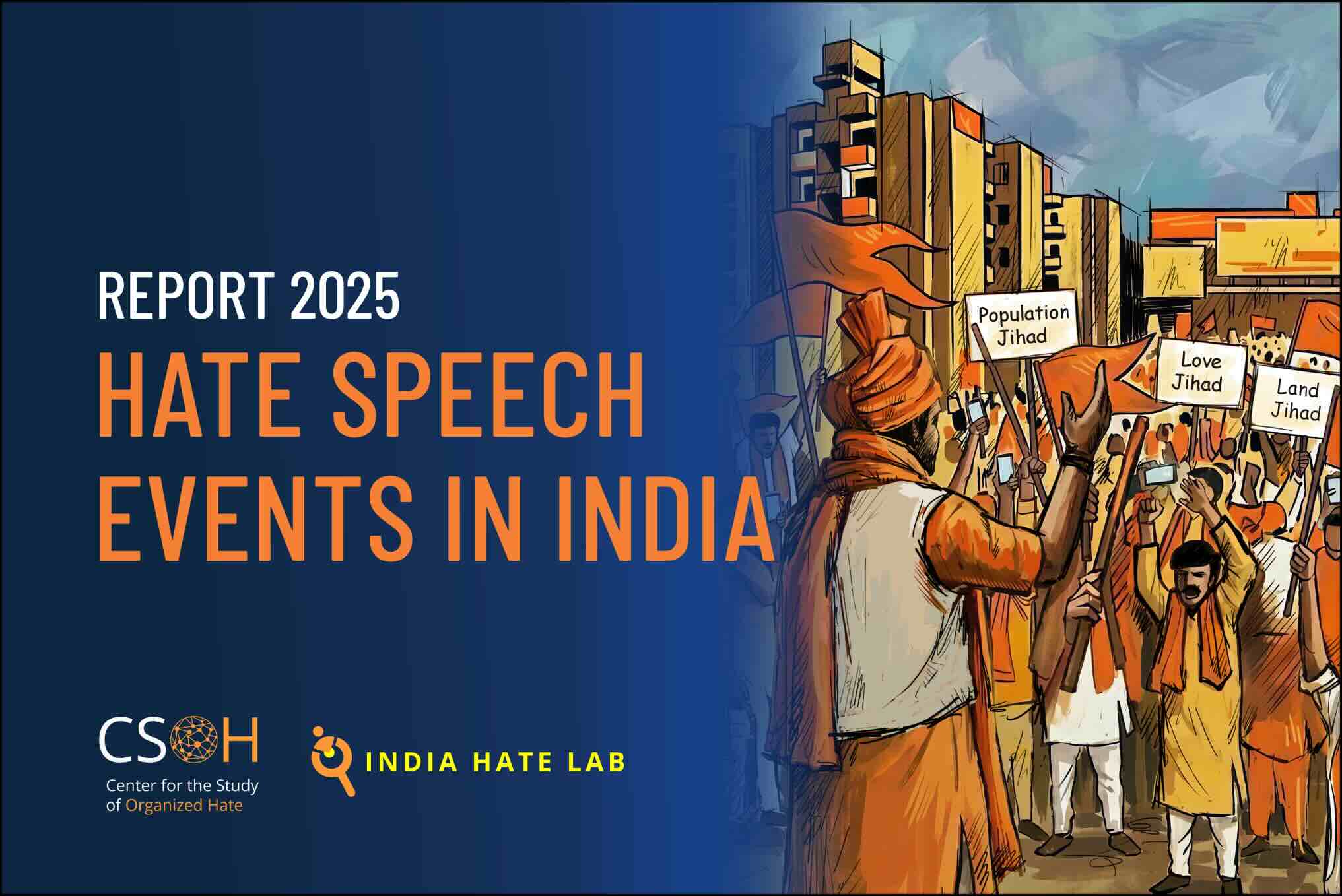
A new report released by the India Hate Lab (IHL), a project of the Center for the Study of Organized Hate (CSOH), documents a significant rise in hate speech targeting religious minorities in India during 2025. The report highlights growing concerns about the role of political rhetoric, public gatherings, and online platforms in amplifying hostility toward minority communities.
According to the report, researchers documented 1,318 verified hate speech events across India in 2025, occurring in 21 states, one union territory, and the National Capital Territory of Delhi. On average, this amounts to roughly four hate speech events per day targeting religious minorities, particularly Muslims and Christians.
Researchers noted that this represents a 13% increase compared with 2024 and nearly a 97% increase compared with 2023, suggesting a continuing upward trend in publicly documented hate speech incidents in the country.
Key Findings
The report identifies several patterns in the hate speech incidents documented in 2025:
- Nearly half of the recorded incidents (656 events) involved conspiracy narratives such as “love jihad,” “land jihad,” or “population jihad.”
- 308 incidents included explicit calls for violence, with more than a hundred speeches directly encouraging the use of weapons.
- A large majority of documented incidents targeted Muslim communities, with a smaller number directed at Christians.
- Public rallies, religious gatherings, and political events were among the most common venues where hate speech was recorded.
Researchers also observed spikes in hate speech following major political or security developments. For example, during a 16-day period between April 22 and May 7, 2025, nearly 100 hate speech events were recorded nationwide, suggesting coordinated mobilization during periods of heightened political tension.
The findings highlight ongoing challenges related to religious freedom, pluralism, and minority rights in India. Hate speech targeting religious communities can contribute to social polarization and, in some cases, increase the risk of discrimination or violence against vulnerable groups.
Advocates for religious freedom emphasize that protecting democratic institutions requires promoting responsible public discourse and ensuring that political rhetoric does not undermine constitutional protections for minority communities.
For organizations focused on human rights and pluralistic democracy, monitoring trends in hate speech and extremism is an important part of understanding broader threats to social cohesion and religious freedom.
🔗 Read the full report:
https://www.csohate.org/2026/01/13/hate-speech-events-in-india-2025/